On Your Own Again Scott Walker Genius

Ross Horton charts Scott Walker's path from sacred to profane across nine records.
Born in Hamilton, Ohio a week or then after New year in 1943, Noel Scott Engel didn't appear to exist destined for stardom, or to exist seen – upon his death – as one of the most revolutionary songwriters e'er to have graced this realm. After several relocations during his youth, his parents settled on California in 1959, by which time young Noel was already interested in subversive pop civilization, from the Beats to rock 'due north' roll.
Scott Walker starting time plant fame equally a member of de-facto boyband The Walker Brothers, named thus because they liked how it sounded (they were, similar the Ramones, all unrelated). Their offset clutch of albums, including the rather incredible Take it Easy with the Walker Brothers, were released to considerable success in the United Kingdom, less and so in their homeland. This is, of grade, an amusing sidenote to Walker'southward career – he can lay claim to have been, at least at ane point, equally famous and sought-after as the Beatles - possibly more so in the UK. He moved to to London in the '60s, and never left the United kingdom.
Though The Walker Brothers reunited later in their career, their success meant that Scott was able to launch his solo career – proving that he had more going on than angelic skillful looks and a aureate voice. His solo career is what introduced Scott to a wider, more discerning audience – an audition that, today, on the day of his passing, mourn a man of incredible talent. He worked with a kaleidoscope of artists, lending his vox or his ear to projects by Pulp, Bat for Lashes and Sunn O))).
Whether you're a fan of his earlier solo records, where he practically perfected and defined 'baroque pop', or his after, more experimental pieces – or both – now is the time for people celebrate Scott Walker, and his incredible career. Below, nosotros look at his well-nigh important albums.
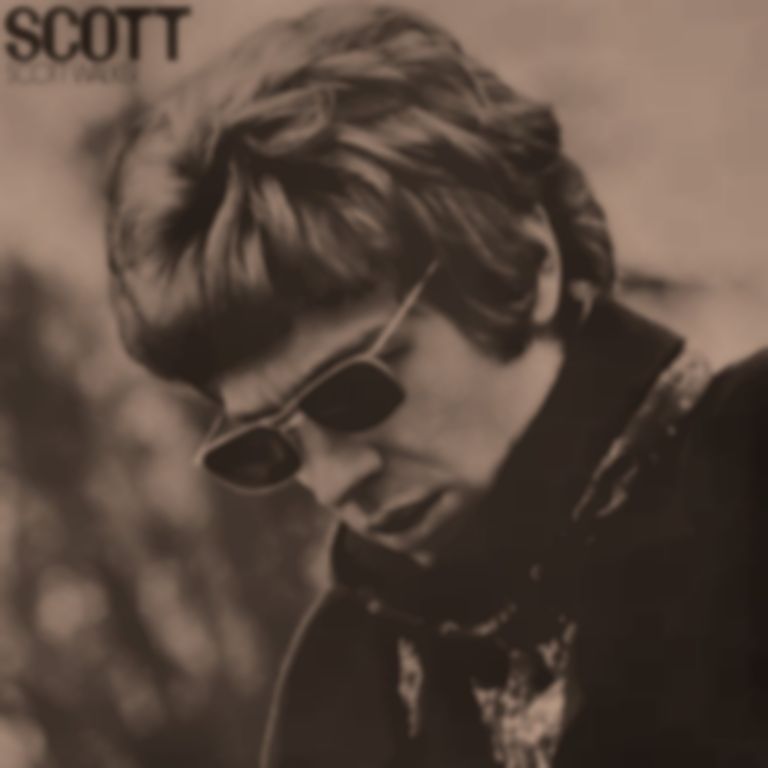
ane. Scott (1967)
Released in 1967, Scott, featuring that iconic anthology cover (shades, pilus like a Roman bosom), was a step away from the shiny pop that made his name. Released merely a few months later on the relatively disappointing Walker Brothers record Images, this self-titled debut was a creative rebirth, the first regeneration of an incessantly regenerating artist. Practically perfect in every way, from product to instrumentation to vocal choices, Scott is probably his virtually influential release.
Yous can hear the background beingness laid for Roxy Music in the languid, lounge-lizard poses. Yous can hear the ears of Britain and the world opening to the compositions of Jacques Brel. Underpinning it all, however, is a sense of existential crunch, a drama and horror not seen in the work of the Brothers. The beautifully menacing take on Brel's "My Death" is a delicious highlight. Listen too closely to "Montague Terrace in Blue" (an original composition) and yous might hear the menacing vocal stylings of Nick Cave and Peter Murphy being born... and somewhere, David Bowie was listening. More on him later.
Highlights: "My Death", "Montague Terrace in Blue", "Such a Small Love"
two. Scott two (1968)
If the first solo album laid the foundations for a thousand careers, Scott 2 built the walls and started on the roof. It's hard to beat a perfect anthology, but on his second, Walker nearly pulled it off. Some other mixture of original compositions and covers of his favourite artists, this was a pace to fully realising his full artistic potential.
His ain compositions, especially "Plastic Palace People" and "The Span", are the highlights. Elsewhere you lot have the harrowing loss-of-innocence tale of "Next", and the hilarious "Jackie", both showcasing Scott's wry sense of humor. If someone were seeking Scott'southward near beautiful, about bombastic album, Scott 2 would be the place to send them.
Highlights: "Plastic Palace People", "The Span", "Jackie", "Side by side"
3. Scott 3 (1969)
For Scott 3, things got... stranger. A personal favourite of many Scott aficionados, it'south ofttimes seen as beingness a stepping stone to bigger and scarier things ("It's Raining Today" is a articulate ancestor of his more sinister material) but Walker's third solo release is conspicuously an extension of ideas that he had been developing since the first album. It'due south also important to his personal narrative considering information technology's the first album that features a bulk of self-composed cloth, and the offset album that gives a clear indication of the route he would take into artistic experimentalism. It's credible, arguably from the offset listen, that these ideas have more weight, more gravitas than annihilation he'd previously released, owing to the emotional investment he has in the material, non least on "Copenhagen" and prostitute tale "Big Louise".
While not up to the standard of the first two in terms of quality, it's imbued with a truer sense of Gothic melodrama that he'd only continue to build on for the rest of his career. Fans weren't as enthused equally he was, as this record marked the kickoff of the end of Scott Walker equally a commercial heavyweight.
Highlights: "It's Raining Today", "Copenhagen", "Large Louise", "Rosemary"
4. Scott 4 (1969)
The 2d album he released in 1969, Scott 4 was calmer, more than relaxed and prettier than its evil older brother. While nonetheless dark and spooky in places (the bells in "Seventh Seal"!), this was the first time that Scott seemed to take a step sidewards. Information technology's the beginning album he released that featured entirely original material, and he uses the platform as a springboard to show off a range of influences, resulting in a varied and satisfying listen. It'southward the album you might go to on a Sunday afternoon, in June.
There are tangible similarities to Ennio Morricone's soundtracks – more than usual – in "Old Homo's Back Again" and "Globe's Strongest Man". This is the most easily-digested Scott Walker anthology, and the easiest starting indicate for new fans.
Highlights: "Boy Child", "Duchess", "Seventh Seal"
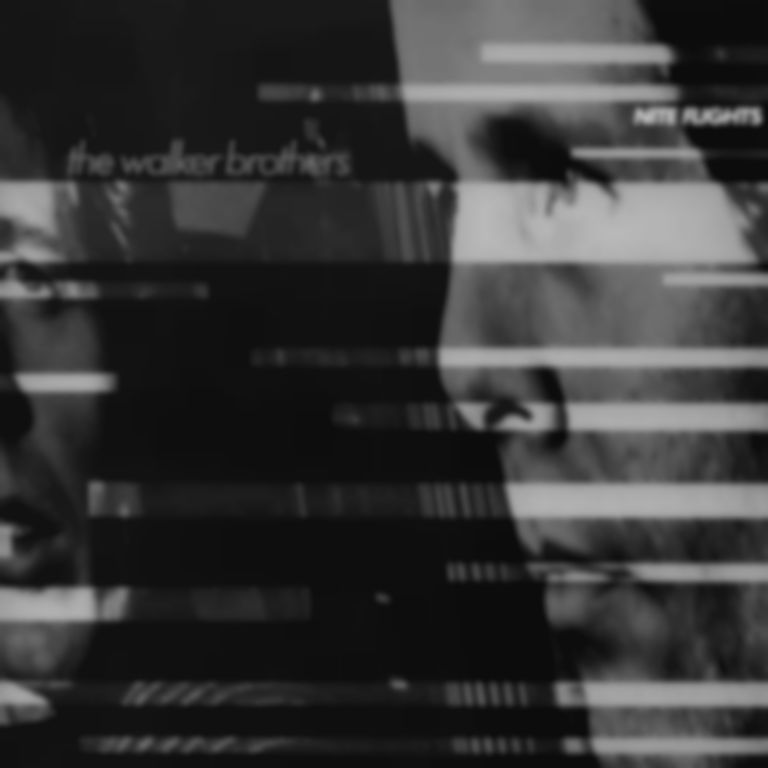
5. Nite Flights (1978)
Sadly, what followed Scott 4 was a period of diminishing returns. Solo albums flopped, the Walker Brothers reunited... then in 1978, Nite Flights was released. Nite Flights, or more than specifically the first iv songs (Scott's contributions), was an exercise in contemporary art-stone that took cues from David Bowie (repaying Bowie's articulate debt to Walker's earlier solo material), Brian Eno and Peter Gabriel. Information technology'due south an essential piece of the art-stone puzzle - "Nite Flights" has Eno DNA, from the fat, lolloping bass to the shuffling drums.
Perversely, Bowie later covered it. On "The Electrician", Scott Walker MKI begins metamorphosizing into Scott Walker MKII – the experimental demoniac. It's harrowing, wild music. The tracks here comprise one of the finest four song stretches in Walker's unabridged canon, but information technology'south hard to recommend listening to the entire matter. What followed was a deafening silence.
Highlights: "Shut Out", "Fatty Mama Kicking", "Nite Flights", "The Electrician"
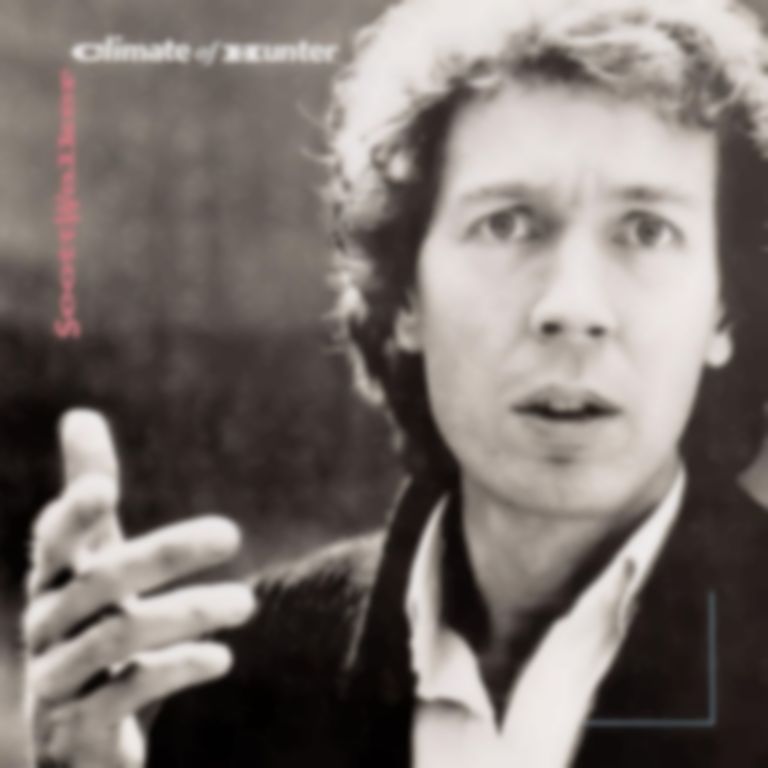
6. Climate of Hunter (1984)
In the years after Nite Flights, Scott all but disappeared. Released in 1984, Climate of Hunter was Walker's only album of the 1980s, a decade where he found his spotlight superseded past his musical offspring – specifically the platinum-haired acolyte David Sylvian, who essentially took Scott's contributions to Nite Flights, refined them and fabricated a career out of them. Japan's 1981 masterpiece Tin Pulsate owes much of its existence to Scott Walker: Walker'southward influence is all over the affair. Climate of Hunter attempted to reclaim some of that lost ground, but was a cerise herring, a simulated start. A strange collection of textures, segues and unnamed oddities, information technology is very much of its time – the demented begetter to the refined children plowing their fashion through Top 10 charts effectually the world. The tape features guest spots from Mark Knopfler and Baton Ocean, but the true appeal is in Scott's voice. His phonation is deeper, the songs rougher and texturally denser, just Climate was not the tape information technology perchance could have been. It was slight where his previous releases were fully grown, stunted where other records stood tall, confusing where others were focused. Scott's metamorphosis entered a disquisitional phase hither, a stage that took years to complete. Scott took some time away, a period of emptiness, before he resurfaced with the darkest album always recorded.
Highlights: "Dealer", "Track 3", "Track Seven"
vii. Tilt (1995)
By 1995, the metamorphosis was consummate. Similar accompanying Jesus on his descent into Hell, Tilt presents the listener with a grotesque, malformed and utterly hideous bastardization of what they previously thought music was. Of grade, at that place have always been challenging albums made by avant-garde artists, only Tilt is nigh certainly the most terrifying anthology to always clamber out of the deep. Where his early solo albums were rich and decadent, Tilt is malfeasant and sickening. Scott'due south vocals on opener "Farmer in the City" are ugly and haunting, and this only worsens as the anthology continues.
Like Satan singing an oratorio in the midst of a Hieronymous Bosch vision of damnation, he looms over proceedings like a titan, a Goya dreamt into life. Tilt is unrelenting. "The Cockfighter" reaches a level of unbearable intensity not previously heard in recorded sound (except, possibly, on Nico'southward Marble Alphabetize). "Manhattan" is rock music, simply corrupted beyond all recognition – like a portrait sprayed with acid. Maybe his best album, Tilt seems like a work of singular saturnine evil, and it'southward difficult to stop in one sitting. However, the journeying through Hell had simply begun.
Highlights: "Farmer in the City", "The Cockfighter", "Manhattan", "Face on Chest", "Tilt"
8. The Migrate (2006)
Of a pair with its predecessor, The Migrate is every bit as challenging and uncompromising, and it represents the culmination of the process begun on Scott 3. Opener "Cossacks Are", with its gunshot percussion and relentless trounce, frames Scott's poltergeist croon as some disembodied cry from the depths of despair. He follows that with the monolithic "Clara" - at twelve minutes, information technology's near half the length of the unabridged Climate of Hunter LP, which shows the gulf in inspiration between the two projects.
The Migrate, while nowhere near equally hideous as Tilt, seems deeper, artier and more controlled. At that place's an argument to be made that this control makes it a more spooky proposition, the Hannibal Lecter of his discography. Information technology'due south incredibly important either way, as without it, he would have never reached his concluding masterpiece.
Highlights: "Cossacks Are", "Clara", "Jesse", "Hand Me Ups"
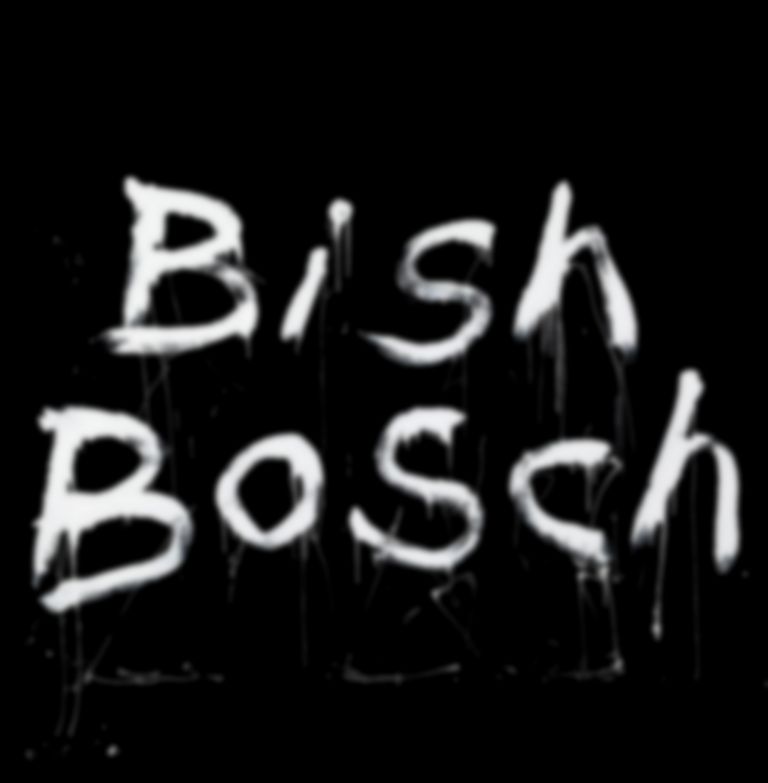
nine. Bish Bosch (2012)
The final masterpiece. He didn't know this would be the final solo studio album he released (soundtracks aside). This is no Blackstar, or fifty-fifty a Post Popular Depression – this is not an artist contemplating mortality, making a last statement to cement their legacy. This is something much more, a next stride. History would have this album as the final part of a trilogy with Tilt and The Migrate, but its true ancestor is Scott 3: The darkness hither is neither raw agony or controlled despair. This is kohl-stained, blackened by the darkest of humours.
Given time, Bish Bosch reveals itself to be not only Scott's nigh playful album, simply also his silliest. In that location's room for toilet humour, difficult science, dwarves and saints. Scott, transformed on Tilt, emboldened on The Drift, spreads his wings on Bish Bosch. He breaks every dominion, includes every possible reference and pun he can find, blends heavy metal guitars with fart sounds and Hawaiian folk and notwithstanding emerges with something resembling perfection. The album showcases an artist at the peak of his considerable powers, but (like Scott 3) is nevertheless criminally underrated by fans.
Highlights: "Epizootics!", "SDSS14+13B (Zercon, A Flagpole Sitter)", "Come across You Don't Bump His Head", "Tar", "Pilgrim"
10.
Other projects followed - nosotros even named his Lord's day O))) collaboration Soused as Album of the Calendar week and more releases volition presumably continue to ooze from the ether, but information technology is in these albums that nosotros run across the true essence of Scott Walker the creative person, and Noel Scott Engel the man.
Writing for Best Fit, Ed Nash said in his review of Scott's The Babyhood of a Leader OST that in the 'fantasy band game' Scott would always be singing the songs, merely I tin't imagine a more nightmarish proposition. This is, of class, the appeal of the man. From the smoothest Gallic pop to the well-nigh despicable experimental sound, Walker e'er defines yous from the inside out, moulding you to fit his prototype. My favourite anthology is Bish Bosch (Scott iii on a weekend), yours is Scott 4, hers is Scott, theirs is Tilt. My Scott Walker is not your Scott Walker, but like yours is non mine.
Scott Walker only is.
Source: https://www.thelineofbestfit.com/features/articles/scott-walker-guide-genius
0 Response to "On Your Own Again Scott Walker Genius"
Post a Comment